Strong supply chain performance has become a strategic differentiator of enterprise companies successfully operating in a complex world of disruptions, digital transformation, and uncertainty. However, many large organizations still develop supply chain capability through fragmented training, informal knowledge transfer, and reliance on individual experience. This gap creates significant material business risk.
One effective way for companies to level the playing field is to establish an internal Supply Chain Academy. It provides a structured, company-owned system for building supply chain capability in a way that is consistent, scalable, and aligned with business strategy. Rather than focusing on isolated training events, a Supply Chain Academy defines how supply chain work is done, how decisions are made, and how leaders are developed across the organization.
What is a Supply Chain Academy?

A Supply Chain Academy is a company-owned, role-based capability system that defines how supply chain work is done, how talent is developed, and how leaders are prepared consistently and at scale. At its most effective, it standardizes decision-making and ways of working, embeds company-specific processes and KPIs, accelerates readiness for critical roles, and supports transformation and growth.
Employees are not only trained on supply chain concepts and theory, but on how the supply chain functions within the company’s own network, systems, and constraints. This alignment dramatically shortens the gap between learning and execution.
What makes an effective Supply Chain Academy?
An effective Supply Chain Academy isn’t just a set of courses. It’s a strategic capability-building engine that turns learning into measurable business performance. Its purpose is clearly tied to the organization’s supply chain strategy, whether that is improving service, reducing cost, increasing resilience, or supporting growth and sustainability. The academy exists to close specific capability gaps, and its success is measured by performance improvements such as better forecast accuracy, higher service levels, or healthier inventory, rather than by course completion rates alone.
A defining feature of a strong academy is a role-based, tiered curriculum that reflects how supply chain work actually happens. Learning paths are tailored to different roles, from planners and buyers to logistics professionals and senior leaders, with progressive levels that move from foundational understanding to advanced application and expertise. This clarity helps employees understand what excellence looks like in their role and what skills they need to develop over time.
Effective academies strike a deliberate balance between theory and practice. Core supply chain concepts are essential, but they are reinforced through real company case studies, simulations, and hands-on exercises using familiar data and scenarios. Learning is further anchored by on-the-job projects that address real operational challenges, ensuring that new knowledge is immediately applied and retained. This practical orientation is critical, as people learn best by doing rather than by passively consuming content.
Indeed, a company should customize its internal Supply Chain Academy because generic capability produces generic results. However, no two supply chains operate the same way. Each company has its own network design, product complexity, customer expectations, risk profile, planning philosophy, systems landscape, financial targets, etc. Off-the-shelf training teaches “best practices” in the abstract. A customized academy teaches how supply chain works inside your business.
From practice to practical: how to apply learning for operational success

Integration into daily work is another hallmark of a successful Supply Chain Academy. Learning is designed to fit naturally into existing processes and routines, supported by short, focused modules, practical tools, and playbooks that employees can use immediately. When learning feels like a helpful enabler rather than an added burden, engagement and impact increase significantly.
Credibility and leadership support are equally important. Instructors and mentors are drawn from a mix of experienced internal practitioners and respected external experts, creating trust and relevance. Leaders actively sponsor the academy, participate in sessions, and reinforce expectations through performance management. This visible engagement signals that capability development matters and helps embed learning into the organization’s culture.
The most effective academies also offer a clear value proposition for participants by linking learning to career progression. Certifications, internal recognition, and transparent career pathways motivate employees and position the academy as an investment in their future, not just a compliance exercise. Over time, communities of practice help sustain learning by encouraging peer exchange and continuous improvement.
Finally, a Supply Chain Academy must evolve. Regular feedback, governance by the business rather than HR alone, and ongoing updates ensure that content stays relevant as strategies, technologies, and risks change. With clear ownership, defined success metrics, and a commitment to continuous improvement, the academy remains a living system that builds enduring supply chain capability and delivers measurable business value.
Optimizing a Supply Chain Academy through integration with Zensimu
While many enterprises recognize the value of a Supply Chain Academy, fewer succeed in translating learning into sustained behavioral change. The most common failure point is not content quality, but application. Employees attend training, understand the concepts, and then return to environments where incentives, workflows, and day-to-day pressures pull them back to old habits. This is where integrating a platform such as Zensimu fundamentally changes the effectiveness of a Supply Chain Academy.
Zensimu strengthens an academy by shifting learning from a periodic activity to a continuous, embedded capability. Rather than separating training from execution, it connects them. Supply chain professionals are not only taught what good planning, decision-making, or collaboration looks like, but are supported in practicing those behaviors in real operational contexts. This significantly increases retention, consistency, and impact.
One of the core challenges in enterprise supply chains is behavioral variability. Even with standardized processes and tools, outcomes depend heavily on how individuals interpret information, manage trade-offs, and collaborate under pressure. Zensimu addresses this gap by focusing on the human side of supply chain performance. Integrated into an academy, it enables organizations to develop not just technical competence, but decision discipline, judgment, and resilience. These capabilities are difficult to codify in traditional training materials.
Leaders creating new leaders through realistic supply train simulations
From an executive standpoint, the value lies in reinforcement. Zensimu allows key academy principles to be reinforced through micro-interventions, simulations, and real-world scenarios that reflect the company’s actual supply chain dynamics. Instead of relying on memory from a workshop or course, employees are continuously prompted to apply the right behaviors at the right moments. This reduces the decay that typically follows formal training and ensures that academy standards remain alive in daily operations.
Integration with Zensimu also enhances leadership development within the Supply Chain Academy. Enterprise leaders are frequently promoted based on functional expertise, yet struggle with enterprise-level decision-making, cross-functional influence, and leading through ambiguity. Zensimu supports leadership capability by creating safe environments where leaders can practice complex decisions, receive feedback, and build confidence before facing high-stakes situations. This accelerates readiness for senior roles and reduces the risk associated with leadership transitions.
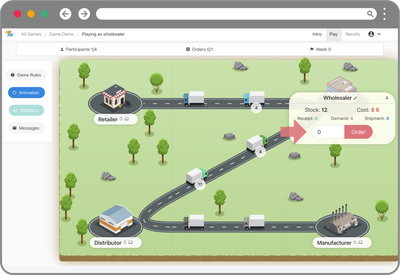
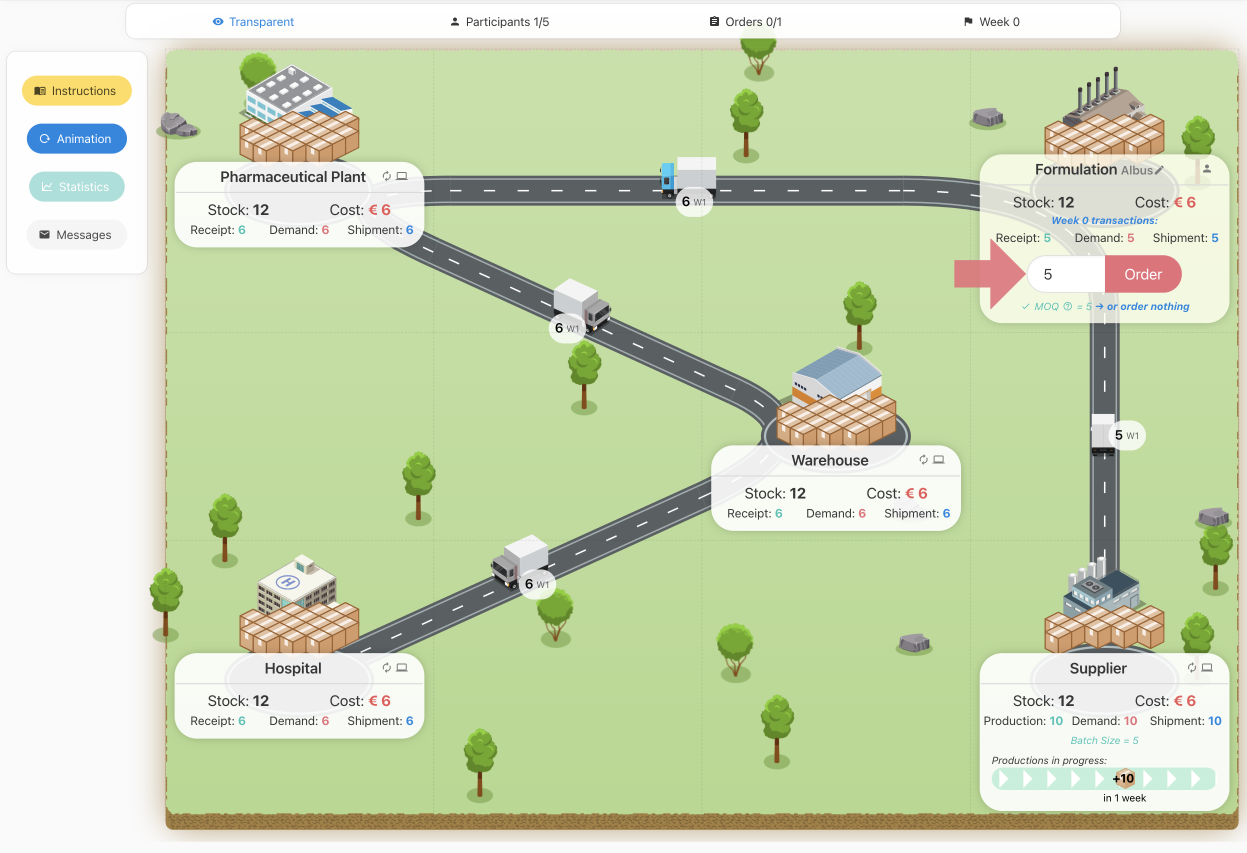
Furthermore, Zensimu’s platform can recreate the design and the organization of a company in order to customize training sessions to illustrate actual and practical processes and challenges. Multiple simulation games can center on specific areas for improvement in order to show the way forward in terms of continuous improvement and supply chain excellence. Integrating Zensimu can mean the difference between generic, theoretical learning experiences and on-the-ground training for more immediate application to an operation.
Lights, camera, action! From rehearsal to measurable ROI and company growth
Another critical benefit is measurability. Executives often struggle to quantify the return on investment of training initiatives. By integrating Zensimu, Supply Chain Academies gain clearer visibility into behavioral adoption and decision quality. This creates a stronger link between capability development and business outcomes such as service stability, inventory performance, and response to disruption. Over time, leadership teams can see not only that people were trained, but that behaviors actually changed in ways that improved performance.
Zensimu also supports scalability, which is essential for enterprise organizations. As supply chains span regions, cultures, and time zones, maintaining consistency becomes increasingly difficult. Zensimu provides a common experiential layer that reinforces shared ways of working regardless of location. This allows the Supply Chain Academy to scale without becoming diluted or overly centralized.
Most importantly, integrating Zensimu shifts the Supply Chain Academy from a knowledge-transfer model to a capability-activation model. Knowledge alone does not drive performance. What drives performance is how people behave when forecasts are wrong, capacity is constrained, or trade-offs are unavoidable. By embedding Zensimu into the academy, enterprises ensure that learning translates into better decisions, stronger collaboration, and more resilient supply chain performance.
For executive teams, this integration transforms the Supply Chain Academy into a living system that continuously develops capability, reinforces standards, and supports the organization through constant change. In doing so, it maximizes the strategic return on both the academy itself and the broader supply chain transformation agenda.
Boost your Supply Chain Academy today!
Create an instructor account to discover our platform and develop customized scenarios relevant for your business.